Introduction to EOS®: How the Entrepreneurial Operating System Works
The Entrepreneurial Operating System® (EOS®) is a proven business framework built on Six Key Components. Learn what EOS is, how it works, and how Ninety brings it to life.

Written by Kris Snyder
Updated at April 30th, 2026
-
 Account Options and Troubleshooting
-
 Integrations
-
 Getting Started
-
 Insights
-
 Scorecard
-
 Rocks
Rocks
-
 To-Dos
-
 Issues
-
 Meetings
-
 Headlines
-
 V/TO
V/TO
-
 Accountability Chart
-
 1-on-1
-
 People and Toolbox
-
 Directory
-
 Knowledge Portal
-
 Assessments
-
 Mobile
-
 Maz
Maz
Table of Contents
What Is the Entrepreneurial Operating System® (EOS®)?
Editor's Note: Kris Snyder is a Professional EOS Implementer® who has worked with more than 50 clients and facilitated over 300 session days, all Powered by Ninety.
The Entrepreneurial Operating System® (EOS®) is a complete set of concepts and practical tools that small and midsize businesses use to standardize how they operate. Every organization already has an operating system of sorts, we call that an “operating system.” EOS is a field-tested methodology designed to make that system work better, so leadership teams spend less time fighting fires and more time building toward their vision.
Gino Wickman created EOS and founded EOS Worldwide to share the methodology with others and train Implementers who could bring an experienced perspective to organizations getting started and running on the system.
Ninety is the most comprehensive software for EOS. In this article, I'll provide a brief overview of the EOS Model®, the EOS Process®, and Ninety's impact on your EOS journey. Find our EOS-specific resources to help you get started with EOS Powered by Ninety here.
The EOS Model®: the six components of a great business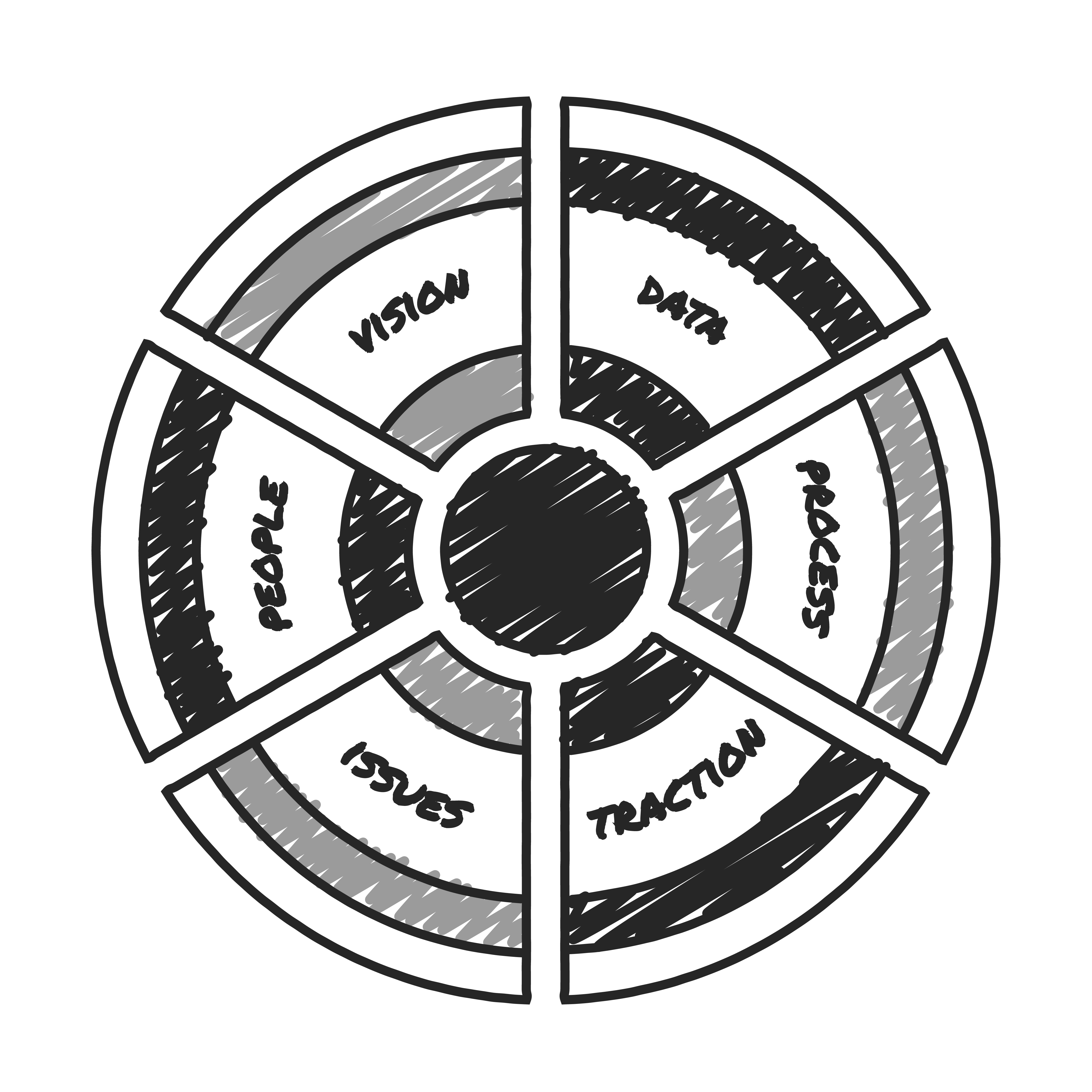
The EOS Model® organizes everything that goes into running a great organization into Six Key Components®:
- Vision
- People
- Data
- Process
- Issues
- Traction
Every team in an EOS company works to strengthen these components every quarter as part of the 90-Day World® of EOS. Click through the tabs below to read more about each component.
Further Reading On the EOS Model
📖 Read my blog, What Is the EOS Model® and How Can It Transform Your Business, to learn more.
The Vision Component®
The Vision Component® is about getting every person in your organization 100% on the same page with where you're going and how you plan to get there. The primary tool for this component is the Vision/Traction Organizer® (V/TO®), which documents your company's identity and strategic direction by answering EOS's 8 Questions™:
- What are your Core Values (the guiding principles embodied by your team members)?
- What is your Core Focus (your purpose, passion, niche, and/or just cause)?
- What is your 10-Year Target™ (a series of bold long-term goals)?
- What is your marketing strategy (your ideal customer, value proposition, proven process, and more)?
- What is your 3-Year Picture™ (what you want the organization to look like in three years)?
- What is your 1-Year Plan (what needs to be accomplished in the next 12 months to be on track for your 3-Year Picture)?
- What are your quarterly Rocks (quarterly goals that build toward your 1-Year Plan)?
- What are your issues (the obstacles, opportunities, challenges, and ideas in your way)?
Where in Ninety: The V/TO tool. Read The V/TO® to get started.
📖 Read more about the Vision Component from my blog, Align Your Future with the Vision/Traction Organizer®.
The People Component®
The People Component® is about having the right people in the right seats. In EOS, "right person" means someone who shares your Core Values. "Right seat" means they have the skills and capacity (what EOS calls GWC™: Get it, Want it, Capacity to do it) for their role.
Where in Ninety: The Accountability Chart® (your organization's structure), the People Analyzer® (for evaluating Core Values and GWC), and the 1-on-1 tool (for quarterly and annual reviews). Read Using the Accountability Chart and Using the People Analyzer®.
Ready to Bring Your Teams Onto Ninety?
📖 Learn how to invite users onto Ninety using the Directory tool.
The Data Component®
The Data Component® is about running your organization on facts rather than feelings or opinions. Every team member should own at least one weekly Measurable: a specific, trackable number that shows whether their area of the business is on track. An effective Scorecard™ (your weekly metrics dashboard) contains five to fifteen Measurables.
Where in Ninety: The Scorecard tool. Read Using the Scorecard Tool and Creating and Updating Measurables.
📖 Read more about the Data Component from my blog, EOS Scorecard™: Make Data Your Superpower.
The Issues Component®
The Issues Component™ is about how well your teams identify, discuss, and resolve the obstacles, opportunities, and decisions that come up every week. EOS uses a method called IDS® (Identify, Discuss, Solve) to work through the Issues list systematically during weekly meetings.
IDS®
Solving Issues is a crucial part of any meeting. Typically, the IDS section of an EOS meeting is the longest agenda item. IDS is a simple framework for teams to master:
- Identify — The habit of adding problems, obstacles, ideas, and opportunities to our team's Issues list.
- Discuss — An on-topic conversation open to every team member that focuses on being solutions-oriented.
- Solve — Issues are solved when the person who identified the Issue is satisfied with the discussion, and the team agrees on the next steps needed.
Where in Ninety: The Issues tool. Read Prioritizing and Ranking Issues.
📖 Read more about the Issues Component® from my blog, Gain Traction with IDS® from EOS®.
The Process Component®
The Process Component® is about creating consistency by documenting and following your Core Processes. When your team follows proven processes, you reduce errors, scale more predictably, and free up leadership to focus on growth.
Where in Ninety: The Knowledge Portal. Read Documenting Your Processes with the Knowledge Portal.
📖 Learn more about this component from the co-author of EOS's latest book Process! in this blog post, Three-Steps to Meaningful Process Improvement.
The Traction Component®
The Traction Component® is about execution and turning your vision into reality through consistent discipline and accountability. The core tools of this component are Rocks (90-day priorities set each quarter), the weekly Level 10 Meeting™ (L10), and your To-Do list. These create the rhythm that keeps your team moving forward.
Rocks
Rocks are your team's most important objectives over the next 90 days. These quarterly goals position your company to achieve its annual goals and move it forward substantially.
📖 Read more about the Rocks from my blog, How to Implement EOS® Rocks for Business Success.
The Meeting Pulse®
What you'll cover, how you'll document the next steps, and how you'll meet are all part of your organization's or team's meeting pulse. Strong EOS teams consistently meet for their weekly Level 10 Meeting™ and hold quarterly meetings every 90 days, including an extended annual meeting.
Consistent meetings allow your team members to focus on getting their work done because they know their Issues will be addressed and resolved during meetings.
📖 Read more about Level 10 Meetings from my blog, Lead World-Class EOS® Level 10 Meetings™ Powered by Ninety.
Where in Ninety: The Rocks, Meetings, and To-Dos tools (available inside meetings and on My 90). Read Using the Meetings Tool.
EOS in Ninety: component-to-tool mapping
The table below shows which Ninety tool corresponds to each EOS component. Use it as a quick reference when getting started.
| EOS Component | Primary Ninety Tool(s) |
|---|---|
| Vision | V/TO |
| People | Accountability Chart, People Analyzer, Quarterly Reviews |
| Data | Scorecard |
| Issues | Issues |
| Process | Knowledge Portal |
| Traction | Rocks, Meetings, To-Dos |
The EOS Process®

The EOS Process® is how organizations begin implementing the Entrepreneurial Operating System through a series of meetings for the leadership team. There are two paths:
- Self-implementation: Your leadership team learns and runs EOS on your own, using resources like this help center, EOS books, and Ninety's built-in tools.
- Professional implementation: You work with a certified Professional EOS Implementer® (EOSi) who facilitates your sessions and guides the process. Ninety can help you find a certified implementer: contact support or visit EOS Resources.
What is the EOS Process
Whether you self-implement or work with an Implementer, the EOS Process follows a consistent cadence:
- 90-Minute Meeting: An introductory session where leadership reviews the EOS Model, the EOS Process, and the decision to commit.
-
Focus Day®: A full-day session that helps your leadership team break through current ceilings and introduces the foundational EOS tools:
- Accountability Chart
- Rocks
- Meeting Pulse
- Scorecard
- Vision Building® Day 1: A full-day session 30 days after the Focus Day, focused on identifying Core Values, Core Focus, and your 10-Year Target.
- Vision Building® Day 2: A second full-day session 30 days later, where you develop the marketing strategy, build the 3-Year Picture, align on the 1-Year Plan, set quarterly Rocks, and identify long-term Issues.
- Quarterly and annual sessions: Recurring planning sessions every 90 days to review the previous quarter, set new Rocks, and course-correct. Once per year, the quarterly session expands into an annual planning review.
Further Reading On the EOS Process
📖 Read my blog to learn more, The EOS Process®: From Start to Infinity.
Read more from our help center: EOS Focus Day®, Powered by Ninety | Vision Building® Days | Quarterly Meetings on Ninety
EOS powered by Ninety
Over 38,000 companies power their EOS journey with Ninety. We apply digital tools and integration to the proven practices of the Entrepreneurial Operating System®.
To see how you can use our platform to improve your business, watch the video below or click here for more EOS-specific resources.
Frequently asked questions about EOS
What size company is EOS designed for? EOS works best for entrepreneurial organizations with 10–250 employees. Many organizations with fewer or more employees also run on EOS successfully, but this range is the core sweet spot.
Is EOS a one-time project or an ongoing system? EOS is an ongoing system, not a one-time implementation. Organizations that get the most out of EOS commit to it as a permanent way of operating. Many companies have been running on EOS for ten years or more.
What's the difference between self-implementing and working with a Professional EOS Implementer®? Self-implementation is a great option for cost-conscious teams or those with strong internal discipline. A Professional EOS Implementer brings facilitation experience, an outside perspective, and accountability that can accelerate the process — particularly for leadership teams working through difficult decisions. Visit EOS Resources to learn how to find an Implementer.
Where can I learn more about EOS as a methodology? Ninety's help center and blog cover EOS concepts extensively. The EOS Glossary is a complete reference for every EOS term. For a deeper dive, Gino Wickman's book Traction is the foundational text, and What the Heck Is EOS? is written for team members newer to the system.